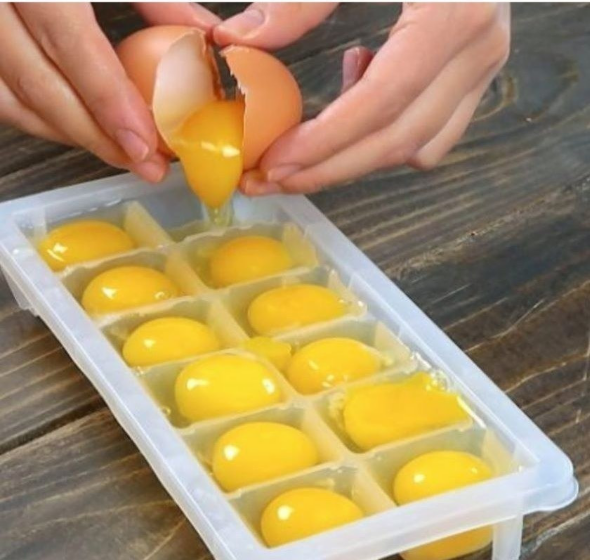
Have you ever found yourself with a surplus of eggs about to hit their expiry date? Instead of letting them go to waste, the solution is in your freezer and a simple ice cube tray! Freezing eggs is a game-changing kitchen trick for bakers, busy cooks, and anyone looking to reduce food waste.
This method allows you to preserve eggs perfectly for up to a year, providing ready-to-use portions for all your cooking and baking needs.
Why You Should Freeze Eggs
Stop Food Waste: Rescue extra eggs before they spoil.
Meal Prep Magic: Have pre-portioned eggs ready for a quick scramble, omelet, or baking session.
Budget-Friendly: Buy eggs in bulk when they’re on sale without worry.
Convenience: Perfect for when a recipe calls for just a yolk or white—freeze the leftovers for later!
How to Freeze Eggs: A Step-by-Step Guide
You can freeze eggs whole, or separate them into whites and yolks. Here’s how to do each method properly to maintain the best texture.
1. Freezing Whole Eggs
This is the best all-purpose method for using in baking or scrambled eggs.
Step 1: Gently whisk the whole eggs in a bowl until the yolks and whites are just combined.
 Pro Tip: Don’t whip in too much air. A gentle stir is all you need to prevent a rubbery texture after thawing.
Step 2: Pour the mixture into a clean ice cube tray. One standard cube slot typically holds about one large egg.
Step 3: Freeze until solid (about 4 hours).
Step 4: Pop the frozen egg cubes out and transfer them to a labeled, airtight freezer bag or container. This saves space and makes it easy to grab just what you need.
Storage: Use within 1 year for best quality.
 Pro Tip: Don’t whip in too much air. A gentle stir is all you need to prevent a rubbery texture after thawing.
2. Freezing Egg Whites
Egg whites freeze beautifully with almost no change in texture—ideal for meringues or omelets.
Step 1: Separate the yolks from the whites.
Step 2: Gently pour individual egg whites into the sections of an ice cube tray. (One slot typically holds one white).
Step 3: Freeze, then transfer the frozen cubes to a labeled freezer bag.
continued on next page
