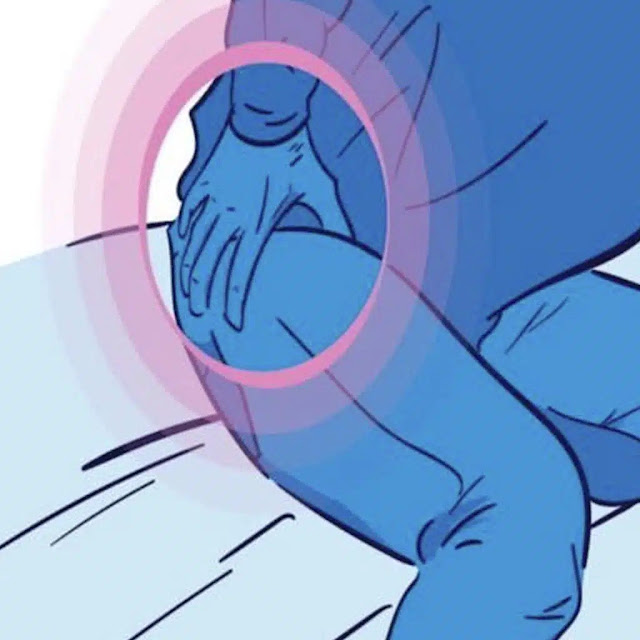
- Piriformis syndrome: Tight muscle in the buttock irritates the sciatic nerve—causing buttock pain that may shoot down the leg.
- Lumbar spine issues: Herniated disc or arthritis in the lower back can refer pain to the hip/buttock area.
- Sacroiliac (SI) joint dysfunction: Inflammation where spine meets pelvis—pain feels like it’s “in the hip” but is actually near the dimples above your buttocks.
4. Pain that radiates down your leg
👉 Think nerve involvement
- Sciatica: Compression of the sciatic nerve (often from spine issues)—pain travels from buttock down calf or foot, sometimes with numbness or tingling.
🚩 Red Flags: When to See a Doctor ASAP
Seek medical attention promptly if you have:
- Sudden, severe hip pain after a fall or injury
- Inability to bear weight on the leg
- Fever, redness, or swelling over the hip (signs of infection)
- Night pain that wakes you up (can signal serious conditions)
- Numbness, weakness, or loss of bladder/bowel control (cauda equina—rare but emergency)
💡 Common Causes by Age & Lifestyle
Group | Most Likely Causes |
|---|---|
Young adults (20s–40s) | Labral tears, FAI, hip flexor strain, piriformis syndrome |
Middle-aged (40s–60s) | Early osteoarthritis, gluteal tendinopathy, bursitis |
Older adults (60+) | Osteoarthritis, bursitis, referred spine pain |
Runners/athletes | Tendon strains, stress fractures, FAI, IT band syndrome |
Sedentary workers | Hip flexor tightness, weak glutes, referred back pain |
🩺 What You Can Do Now (At-Home Relief While You Figure It Out)
✅ Rest – Avoid activities that worsen pain (e.g., stairs, prolonged sitting).
✅ Ice or heat – Ice for acute pain/swelling (15 mins, 3x/day). Heat for stiffness or chronic ache.
✅ Gentle stretching –
- For front hip: kneeling hip flexor stretch
- For side hip: figure-4 stretch (seated piriformis stretch)
✅ OTC pain relief – NSAIDs (like ibuprofen) can reduce inflammation—if safe for you.
✅ Strengthen supporting muscles – Clamshells, bridges, and side leg raises help stabilize the hip.
❌ Avoid: Deep squats, high-impact exercise, or “pushing through” sharp pain.
🩻 How It’s Diagnosed
Your doctor may use:
- Physical exam: Range of motion tests, special maneuvers (like FABER test for hip joint)
- Imaging:
- X-ray: Checks for arthritis, bone spurs, fractures
- MRI: Detects soft tissue issues (labral tears, tendons, bursae)
- Ultrasound: Good for bursitis or tendon tears
- Injections: A diagnostic hip injection (numbing medicine) can confirm if pain is coming from the joint.
🌟 The Bottom Line
Hip pain is rarely “just aging” or something you have to live with. Whether it’s a worn joint, irritated tendon, or even a pinched nerve, most causes respond well to targeted treatment—from physical therapy and activity modification to injections or (rarely) surgery.
But the first step is knowing what kind of hip pain you have. So pay attention to where it hurts, when it happens, and what makes it better or worse. That information is gold for your doctor—and your path to relief.
Have you dealt with hip pain? What helped you?
Share your experience in the comments—your tip might be just what someone else needs to hear. And if this helped clarify your symptoms, please pass it on. Because no one should have to walk through life in pain when help is available. 💙
