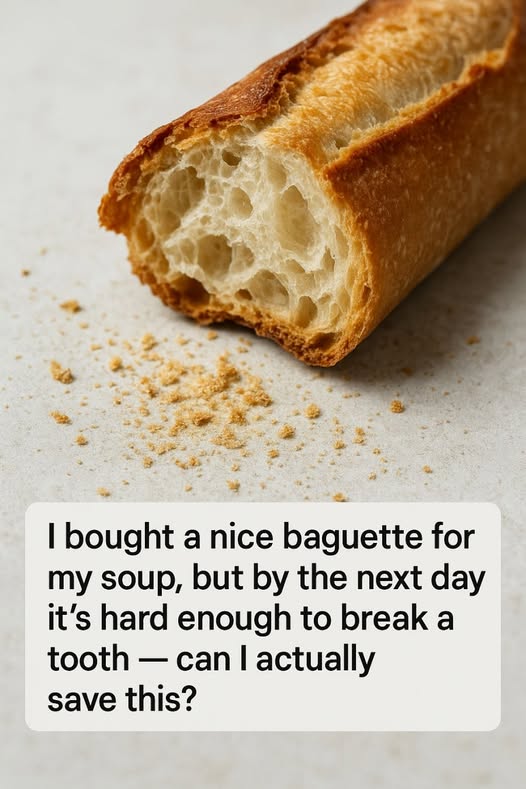
There’s nothing quite like the satisfaction of tearing into a fresh baguette to accompany a comforting bowl of soup. Crisp on the outside, soft and airy on the inside, a fresh baguette is a culinary delight. However, many of us have experienced the frustration of waking up the next day to find our once-perfect baguette has transformed into a rock-hard weapon. What happened?
Fear not, for a hardened baguette isn’t necessarily destined for the compost bin. There are several ways to salvage it and even transform it into new culinary delights. This article will explore the science behind why baguettes harden overnight, techniques to revive them, and creative ways to use a stale baguette.
Advertisement
1. Why Your Perfect Baguette Turns Rock-Hard Overnight
The main culprit behind your baguette’s transformation is a process known as starch retrogradation. When you bake bread, the starch inside the bread gelatinizes, which contributes to its soft texture. However, as the bread cools and sits, the starch molecules begin to recrystallize, expelling water and leading to a hard texture.
Humidity and temperature fluctuations can exacerbate this process. A baguette left out at room temperature will begin to harden within 8 to 12 hours after baking. Keeping it in a drier environment accelerates the starch retrogradation, making it even quicker to lose its moisture.
2. The Science of Retrograded Starch (And Why It Matters for Chewy Crusts)
Starch retrogradation is a natural process where gelatinized starch molecules realign and recrystallize. This process expels water, which is then absorbed by other components of the bread or evaporates, leading to staling. This is why baguettes, with their thin crust and airy crumb, can become hard and dry much faster than denser breads.
The chewy crust of a baguette is particularly susceptible to drying out. As moisture evaporates, the crust loses its pliability, and the recrystallization of the starches contributes to a brittle texture. Understanding this process is key to reversing or mitigating its effects.
3. When Is a Stale Baguette Truly “Too Far Gone” to Save?
While many methods can rejuvenate a stale baguette, there are limits to what can be done. If a baguette is not only hard but also moldy or has an off smell, it’s best to discard it. Mold can penetrate deeper than the surface, making it unsafe to consume.
However, if the baguette is merely hard but otherwise free of spoilage, it can often be revived or repurposed. The key is to catch it before it becomes too desiccated, as extreme dryness can make it difficult to restore any semblance of its former texture.
4. The Classic French Trick: Reviving Bread With a Splash of Water and a Hot Oven
One traditional method to revive a stale baguette involves using water and heat. Start by preheating your oven to 300°F (150°C). Lightly sprinkle or mist the baguette with water, covering the crust to avoid saturation.
Place the dampened baguette directly on the oven rack and heat it for about 5 to 10 minutes. The water creates steam, which helps rehydrate the bread while the oven’s heat restores the crust’s crispness. Remove it from the oven once the crust feels crisp again, and let it cool slightly before serving.
5. Viral TikTok Hack: Running Your Baguette Under the Tap — Does It Actually Work?
The TikTok hack of running a stale baguette under the tap may sound odd, but it leverages the same principles as the classic method. The key is to ensure an even coat of water over the bread without drenching it.
After wetting the baguette, place it in a preheated oven (around 300°F or 150°C) for about 10 minutes. The steam generated in the oven rehydrates the bread while the dry heat crisps the crust. This method can indeed restore the baguette to a near-fresh state, though caution is needed to avoid over-wetting.
6. The Right Way to Use the Microwave Without Turning Bread Rubbery
Microwaving bread can be tricky, as it tends to make bread rubbery or chewy. To avoid this, wrap the baguette in a damp paper towel, which adds moisture to the microwave environment.
Microwave the wrapped baguette for 10 to 15 seconds at a time, checking its texture after each interval. This gentle heating can help revive some of the bread’s softness without creating the unpleasant chewiness that can occur with direct microwaving.
7. Turning Yesterday’s Baguette Into Today’s Garlic Bread, Croutons, and Crostini
A hardened baguette can be the perfect candidate for garlic bread, croutons, or crostini. For garlic bread, slice the baguette, spread with garlic butter, and bake in the oven until golden.
For croutons, cube the baguette, toss with olive oil and your choice of herbs, and bake until crispy. Crostini can be made by slicing the baguette thinly, brushing with olive oil, and baking until crisp. These methods transform the firmness of stale bread into a desirable texture.
8. Soups, Stews, and Strata: When Your “Ruined” Baguette Becomes an Asset
Incorporating stale baguette into soups and stews is an excellent way to utilize its texture. It can act as a thickener when added in chunks, absorbing the liquid and contributing to the dish’s body.
For strata, a savory bread pudding, use stale baguette slices to layer with eggs, cheese, and vegetables before baking. The bread soaks up the custard, creating a rich, satisfying dish. These applications highlight the versatility of a stale baguette.
9. Freezing Fresh: How to Stop Retrograded Starch Before It Starts
To prevent a baguette from going stale, freezing is an effective method. Slice the baguette before freezing, which allows you to thaw only what you need, minimizing waste.
Wrap the slices or whole baguette tightly in plastic wrap, then place in a freezer bag. The low temperatures of the freezer slow the starch retrogradation process, preserving the bread’s texture. To refresh, thaw the bread at room temperature and finish with a brief stint in a hot oven to restore crispness.
10. Paper Bags, Bread Boxes, and the Fridge Debate: Where to Store Baguettes
Storing a baguette in a paper bag allows it to breathe slightly, maintaining its crust while slowing moisture loss. Bread boxes offer a similar environment, with the added benefit of protecting the loaf from pests.
Refrigeration is generally not recommended for baguettes, as the cold accelerates starch retrogradation. For short-term storage, a bread box or paper bag at room temperature is ideal, while longer storage should utilize freezing.
11. How Artisan vs. Supermarket Baguettes Age Differently
Artisan baguettes, typically made with fewer preservatives and a longer fermentation process, often have a more complex flavor but can go stale faster than supermarket varieties.
Supermarket baguettes may contain additional ingredients or stabilizers to extend shelf life, which can delay staling but also affect flavor and texture. Understanding these differences can help in selecting the right bread for your needs and expectations.
12. Smart Slicing: Managing Portions So Less Bread Goes Stale
Consider slicing only what you plan to consume immediately, leaving the rest of the baguette intact. This limits exposure to air and helps preserve the bread’s freshness.
For smaller households or slower consumption rates, pre-slicing and freezing individual portions can ensure that every slice is as fresh as the day it was baked, reducing waste and extending the life of your bread.
13. When to Embrace the Crumb: Breadcrumbs, Stuffing, and Other Second-Life Uses
Creating breadcrumbs from stale baguettes is a simple and effective way to reduce waste. Simply grind the stale bread in a food processor, then store in an airtight container.
Advertisement
Stale baguettes are also perfect for stuffing, whether in poultry or as a standalone dish. Their firmness helps them hold up to moisture, making them ideal for absorbing rich flavors. These uses turn an otherwise unsalvageable loaf into a valuable kitchen staple.
