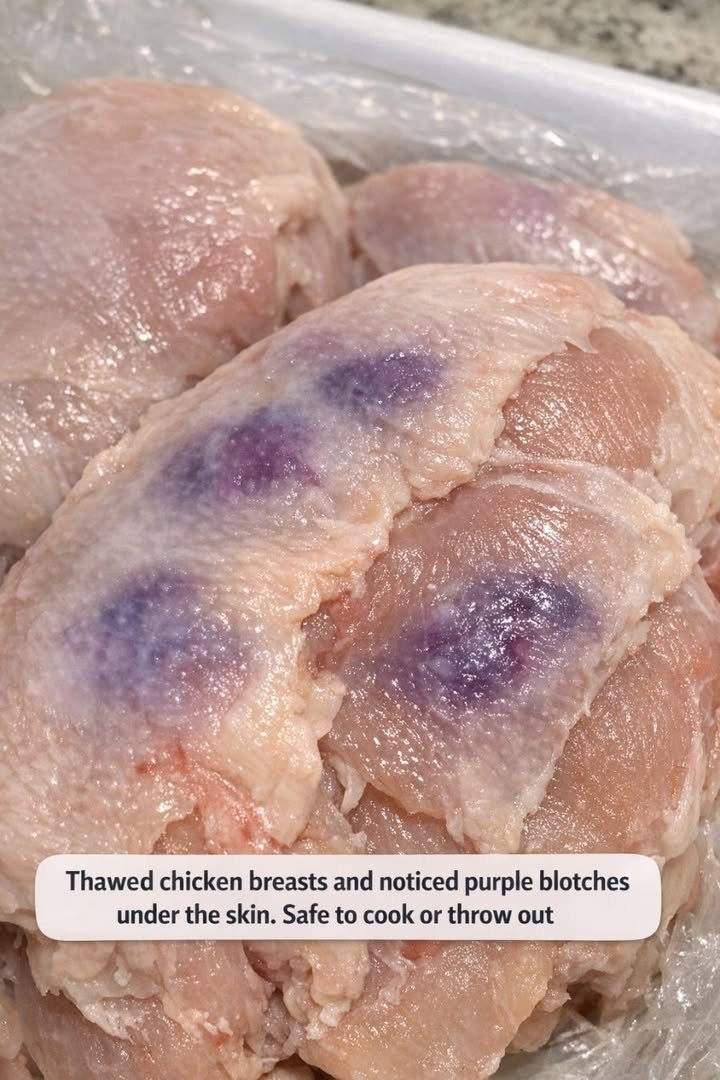
Thawed chicken breasts and noticed purple blotches under the skin. Safe to cook or throw out
4. Smell, Texture, and Color: The Key Safety Checks Before Cooking
Before cooking any chicken, it’s essential to perform a few quick checks to ensure its safety. Start with the smell test: fresh chicken should have a mild, neutral odor. If it smells sour, ammonia-like, or just ‘off,’ it’s best to discard it.
Next, examine the texture. Fresh chicken should be moist but not slimy. A slimy texture is a common sign of bacterial growth. Lastly, while color can naturally vary, any greenish or gray spots are red flags. Remember, when in doubt, it’s safer to throw it out.
5. When Purple Means You Should Throw the Chicken Out
While purple blotches are often harmless, there are instances where they can indicate spoilage or poor quality. If the purple discoloration is accompanied by a foul odor, a sticky or slimy texture, or an overall change in color to gray or greenish tones, it’s a sign that the chicken is no longer safe to eat.
Additionally, if the chicken has been improperly thawed or stored at unsafe temperatures, it increases the risk of bacterial growth, which can lead to foodborne illnesses. If you notice any combination of these warning signs, it’s prudent to discard the chicken to avoid potential health risks.
6. When Purple Is Harmless and the Chicken Is Still Safe to Eat
In many cases, purple blotches on chicken are harmless and do not affect the safety of the meat. If the discoloration is solely from bone marrow leakage or myoglobin and the chicken passes the smell and texture tests, it is safe to cook and consume.
Keep in mind that cooking the chicken to the proper internal temperature of 165°F (74°C) will kill any potentially harmful bacteria. Thus, even if the chicken appears a bit unusual, it can still be safe to eat once properly cooked.
7. How Freezing, Thawing, and Packaging Can Create Strange Colors
The process of freezing and thawing can lead to various color changes in chicken, largely due to the formation and melting of ice crystals. These crystals can damage cell structures and cause the release of pigments like myoglobin and bone marrow content.
Packaging plays a role too. Vacuum-sealed packaging can minimize color changes by reducing exposure to air, whereas poorly sealed or punctured packaging can exacerbate discoloration. Understanding these factors can help you anticipate and accept these natural color variations.
8. Safe Thawing Methods That Reduce Unpleasant Discoloration
To minimize discoloration when thawing chicken, it’s important to use safe methods that also maintain the meat’s quality. The best practice is to thaw chicken in the refrigerator, allowing it to thaw slowly and evenly over several hours or overnight. This method helps prevent temperature fluctuations that can enhance discoloration.
Alternatively, using cold water thawing can be effective if done correctly. Ensure the chicken is in a leak-proof plastic bag and submerge it in cold water, changing the water every 30 minutes. Avoid thawing chicken at room temperature, as this can promote bacterial growth and increase the risk of spoilage.
