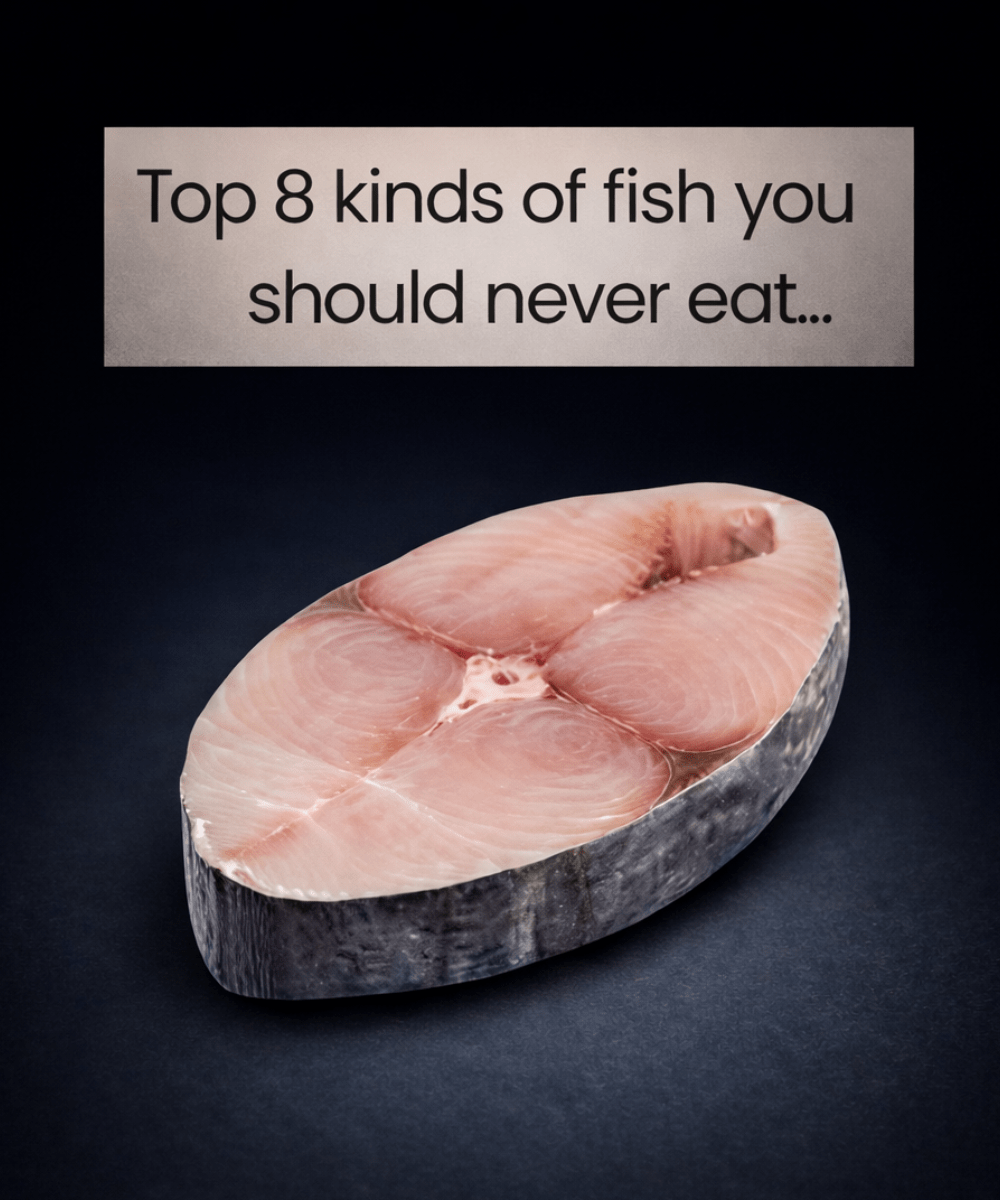
5. Tuna
Tuna salads and steaks feel convenient, but mercury varies—higher in larger types like bigeye.
FDA advises limiting albacore and enjoying light canned sparingly. Variability keeps it on watch lists. The next group carries stronger warnings.
 4. King Mackerel
 4. King Mackerel
King mackerel’s bold flavor attracts fans, but high mercury (around 0.73 ppm) places it in categories to avoid frequent consumption.
Predatory nature drives accumulation. Guidelines prioritize caution. Number three raises similar issues.

3. Shark
Shark finds its way into some dishes, yet very high mercury (near 1 ppm) makes it one to steer clear of regularly.
Top predators bear heavy loads. Concerns extend beyond mercury to conservation. The next is comparably concerning.
2. Swordfish
Swordfish steaks impress with meaty texture, but mercury levels (around 1 ppm) lead experts to recommend avoidance for most.
Its size and diet contribute significantly. Now for the one often topping charts.
1. Tilefish (Gulf of Mexico)
Tilefish from the Gulf holds the highest recorded mercury—over 1.4 ppm in some tests—making it the most cautioned against.
Deep-water habits and predation amplify risks. Many switch permanently to safer options.

Quick Comparison: Reasons to Limit These Fish
| Fish | Approx. Mercury (ppm) | Omega-3 Level | Main Concern |
|---|---|---|---|
| Cod | Low (~0.11) | Low | Minimal omega-3 benefits |
| Mahi-Mahi | Moderate (~0.18) | Low | Balance of mercury and benefits |
| Orange Roughy | High (~0.57) | Moderate | Elevated mercury |
| Tuna (varies) | Moderate to High | High | Mercury in larger types |
| King Mackerel | High (~0.73) | Moderate | High mercury |
| Shark | Very High (~0.98) | Varies | Very high mercury |
| Swordfish | Very High (~1.0) | Moderate | Very high mercury |
| Tilefish (Gulf) | Highest (~1.45) | Moderate | Highest mercury |
(Data based on FDA averages; individual fish vary.)
continued on next page
