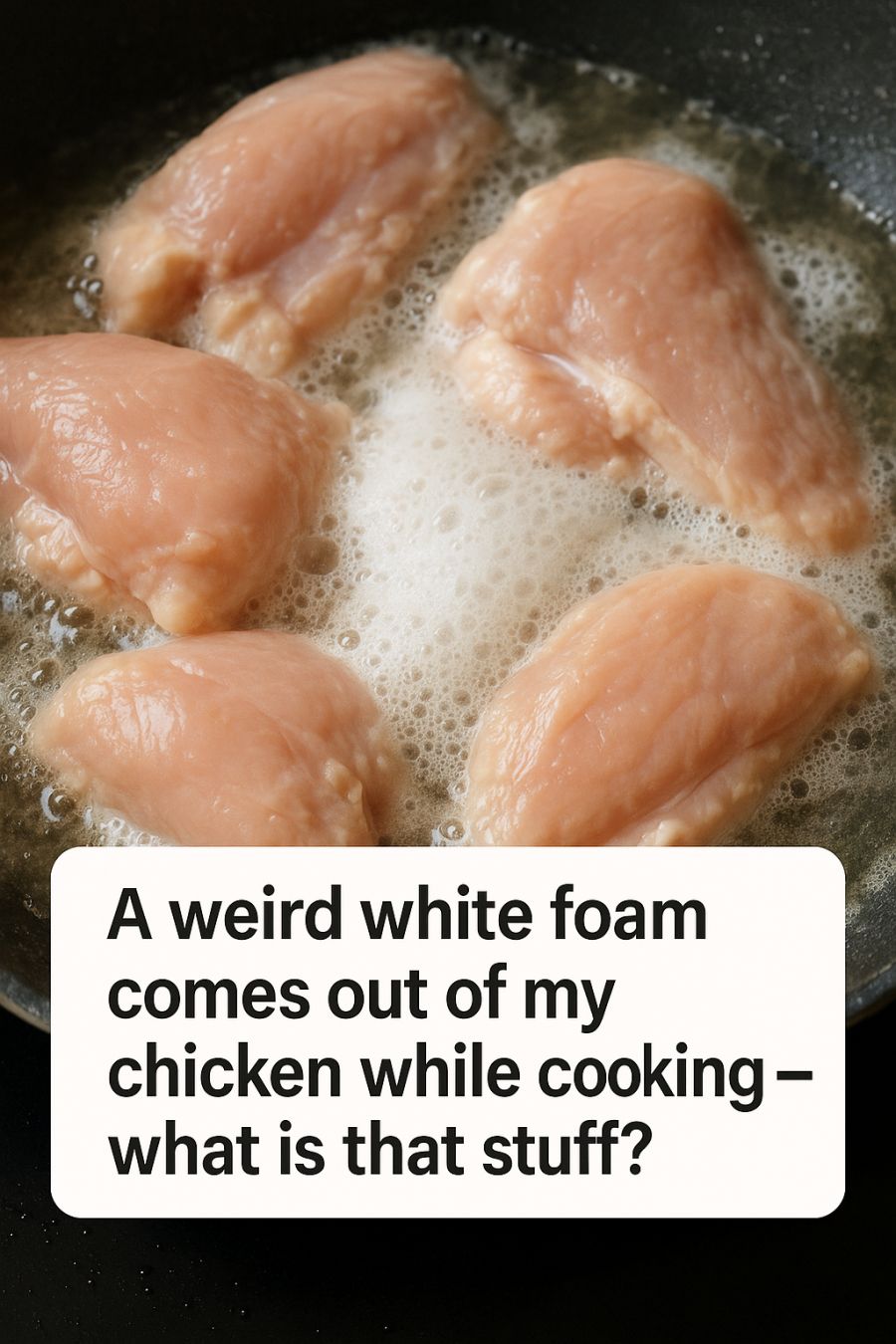
Cooking chicken is a common kitchen task, but many people are puzzled by a strange phenomenon that occurs during the process: the appearance of a weird white foam. This foam can be alarming, especially for those unfamiliar with it, leading to concerns about food safety and quality. However, understanding what this foam is and why it forms can help ease these concerns and improve your cooking experience.
In this article, we’ll delve into the mystery of the white foam that emerges when cooking chicken. We’ll explore its composition, whether it affects the safety or quality of the meat, and
1. What Is the Weird White Foam on Cooking Chicken, Really?
The white foam that appears when cooking chicken is primarily composed of protein and water. As chicken heats up, the muscle fibers contract, pushing out water mixed with dissolved proteins like albumin. This mixture coagulates when it comes into contact with heat, forming the white foam that so many cooks notice. It’s a natural part of the cooking process and doesn’t necessarily indicate anything amiss with the chicken. The amount of foam can vary depending on several factors, including the cooking method and the chicken’s freshness.
2. The Science of Albumin: The Protein Behind the Foam
Albumin is a water-soluble protein that is abundant in chicken muscle. When chicken is heated, the albumin is expelled along with water from the muscle fibers. As the temperature rises, albumin denatures and coagulates, creating the visible white foam. This is similar to what happens with egg whites, which are also rich in albumin, when they cook and turn white. The presence of albumin is a natural component of chicken and is not harmful.
3. Why Chicken Releases More White Foam Than Other Meats
Chicken tends to release more white foam compared to other meats due to its higher water content and the presence of more easily extractable proteins like albumin. Chicken is often processed and packaged with added water to enhance juiciness, which can contribute to the amount of foam produced during cooking. Additionally, the leaner nature of chicken compared to red meats means there’s less fat to obscure the presence of proteins in the cooking liquid.
4. Fresh vs. Frozen: How Processing Affects Foam Formation
The formation of white foam can differ between fresh and frozen chicken. Frozen chicken tends to lose more moisture during thawing, which can lead to increased protein leakage and more foam when cooked. The freezing process can also cause cell walls to rupture, releasing more proteins into the cooking environment. Conversely, fresh chicken might produce less foam due to its intact cell structure, but variations can occur depending on how the chicken was processed and stored.
5. Does White Foam Mean the Chicken Has Gone Bad?
The presence of white foam does not mean the chicken has gone bad. It is a natural byproduct of protein and water being released during cooking. However, it’s important to ensure that chicken is fresh before cooking. Bad chicken will have an off smell, slimy texture, or discoloration, none of which are related to the appearance of white foam. Always rely on these indicators rather than the foam to assess the quality of your chicken.
6. Is the White Foam Safe to Eat or Should You Skim It Off?
The white foam is safe to eat as it is simply a combination of protein and water. There is no health risk associated with consuming it. However, some people prefer to skim it off for aesthetic reasons or to achieve a clearer cooking liquid. If you’re making a dish where the appearance of the broth or sauce is important, gently skimming off the foam with a spoon can improve the presentation.
7. How Cooking Methods Change the Amount of Foam You See
Different cooking methods can influence the amount of white foam observed. Boiling or simmering chicken can produce more noticeable foam compared to baking or frying because the proteins are more easily released into the cooking liquid. High-heat methods like grilling or roasting tend to sear the surface proteins, reducing the visibility of foam. The key is to choose a cooking method that aligns with your desired outcome in terms of flavor and presentation.
8. The Role of Brines, Marinades, and Added Water in Extra Foam
Brining or marinating chicken can increase the amount of white foam, as these processes introduce additional water and dissolve more proteins into the meat. When chicken is treated with a brine, it absorbs extra moisture, which can then be expelled during cooking along with the natural juices. Similarly, commercially processed chicken often includes added water to enhance juiciness, contributing to more foam during cooking.
Continue reading…
