- Ask your partner if you snore loudly or stop breathing.
- Consider a home sleep test or see a sleep specialist.
- Weight loss, side-sleeping, or CPAP (if diagnosed) usually resolves drooling.
4. Gastroesophageal Reflux Disease (GERD / Acid Reflux)
Why it happens
Acid reflux irritates the throat → increased saliva production as a protective reflex → drooling during sleep. Many people also sleep with mouth open due to discomfort.
Who it affects most
- People who eat late, consume spicy/acidic foods, or have hiatal hernia
- Those waking with sour taste, sore throat, or chronic cough
What to do
- Elevate head of bed 15–20 cm (use wedge pillow or blocks under bed legs).
- Avoid eating 2–3 hours before bed.
- Try antacids or see doctor for PPI trial if symptoms persist.
5. Neurological or Muscle Conditions
Why it happens
Conditions that weaken facial/oral muscles or impair swallowing can cause drooling during sleep (when muscle tone is lowest).
Common causes
- Bell’s palsy or facial nerve issues
- Parkinson’s disease (early sign in some cases)
- Stroke aftermath
- Myasthenia gravis
- Certain medications (antipsychotics, antidepressants) that cause dry mouth → rebound drooling
What to do
- If drooling is new + accompanied by facial weakness, speech changes, tremors, or swallowing difficulty → see neurologist urgently.
6. Excessive Saliva Production (Hypersalivation / Sialorrhea)
Why it happens
Some people naturally produce more saliva, especially if:
- Taking medications (clozapine, antipsychotics, some antidepressants)
- Have acid reflux (triggers protective saliva increase)
- Have oral infections or poorly fitting dentures
- Have neurological conditions (Parkinson’s, cerebral palsy)
What to do
- Identify and treat underlying cause (medication review, reflux treatment, dental check).
- Chew sugar-free gum or use anticholinergic mouth rinse (prescription) if severe.
Quick Action Guide – When to Worry
See a doctor soon if drooling is new and comes with:
- Facial weakness, drooping mouth, or speech difficulty
- Trouble swallowing or choking on food/liquids
- Tremors, stiffness, slow movement
- Sudden onset + snoring/gasping at night
- Persistent sore throat, hoarseness, or lump sensation
See a dentist or ENT if:
- Chronic mouth breathing
- Bad breath despite good hygiene
- Dry mouth alternating with drooling
- Poorly fitting dentures
Bottom Line
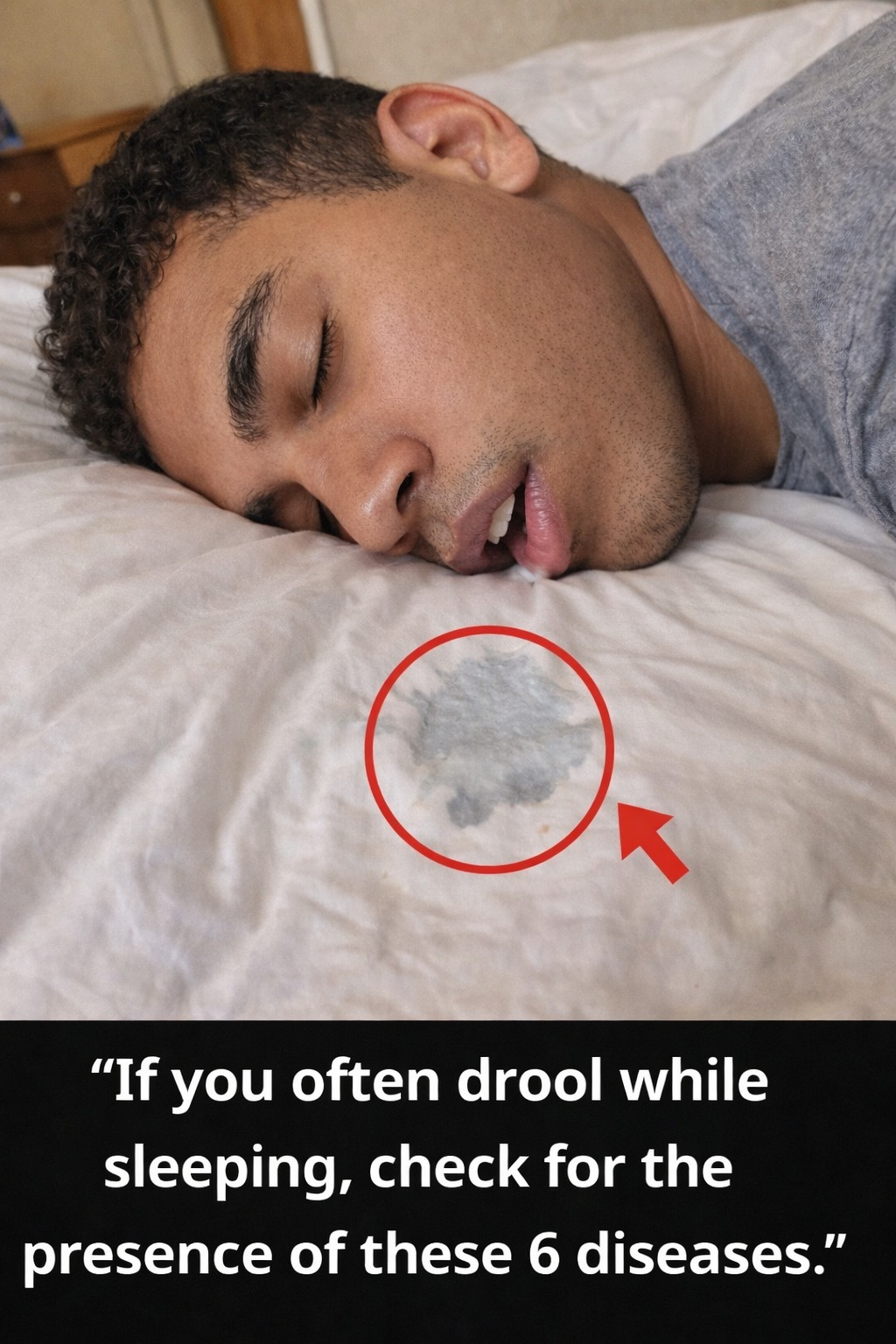
Most nighttime drooling is harmless and caused by sleep position + mouth breathing. Switching to back-sleeping with proper pillow support, clearing nasal passages, and treating reflux/apnea often resolves it completely.
When drooling is new, one-sided, or accompanied by neurological symptoms — it’s a red flag that deserves prompt evaluation.
You know your body best. If the drooling feels “different” or comes with other changes — don’t ignore it.
Disclaimer
This article is for informational purposes only and is not medical advice. Excessive drooling during sleep can sometimes indicate serious conditions (stroke, neurological disease, sleep apnea, GERD complications, etc.). If drooling is sudden, one-sided, or accompanied by weakness, speech difficulty, swallowing trouble, or choking — seek emergency medical attention immediately. Persistent drooling or related symptoms should be evaluated by a physician, neurologist, ENT specialist, or sleep doctor. Personalized diagnosis and treatment are essential.
