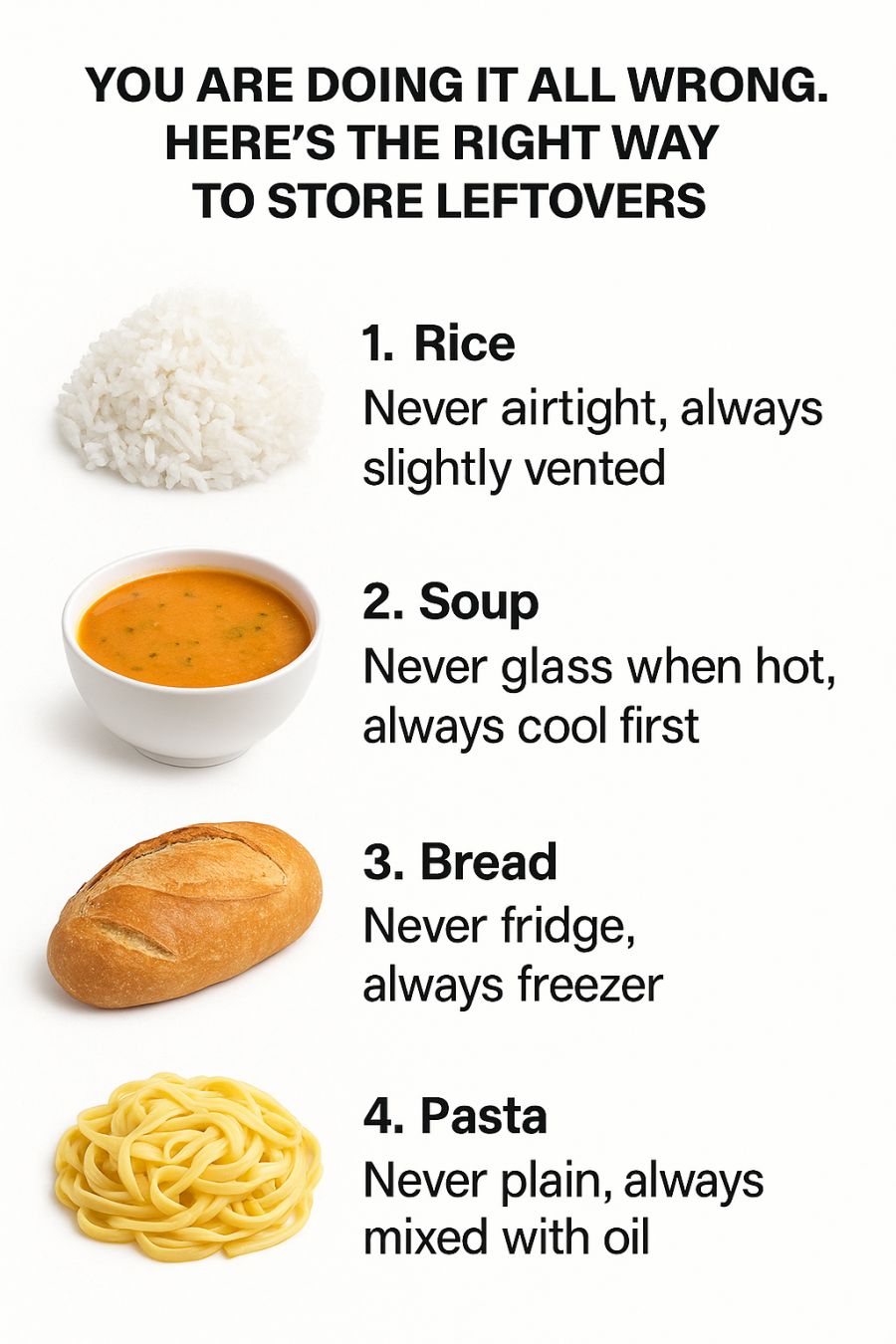
You are doing it all wrong. Here’s the right way to store leftovers
6. Storing Pasta: Mixing with Oil to Prevent Stickiness
Pasta tends to stick together when stored, especially if it’s left without any sauce. To prevent this, toss the cooked pasta with a little olive oil before storing.
This method creates a barrier between the pasta strands, reducing stickiness. Store the pasta in an airtight container in the refrigerator, and it’s best consumed within three to five days. When reheating, a splash of water can help restore moisture and prevent it from drying out.
7. Maximizing Freshness with Proper Labeling
Labeling your leftovers might seem like an unnecessary step, but it can significantly enhance food safety and reduce waste. Include the date of storage and a brief description of the contents on the label.
This practice helps you keep track of how long items have been stored, ensuring you consume them while they’re still fresh. Use a waterproof marker or labels that won’t smudge in the freezer or fridge.
8. Utilizing the Right Temperature Settings
Your refrigerator and freezer’s temperature settings play a vital role in food preservation. Set your fridge to 40°F or slightly lower, and your freezer to 0°F for optimal storage.
Regularly check the temperature with an appliance thermometer, as built-in thermostats can sometimes be inaccurate. Keeping your fridge and freezer organized also helps maintain consistent temperatures, as overcrowding can impede airflow.
9. The Role of Portioning in Effective Leftover Storage
Portioning leftovers before storing them can save time and reduce waste. Divide large quantities of food into meal-sized portions to make reheating more convenient.
This approach not only helps with quick meal prep but also keeps you from reheating more food than you need, which can degrade the quality of leftovers. Portioning also allows for better organization in the fridge or freezer, making it easier to locate what you need.
